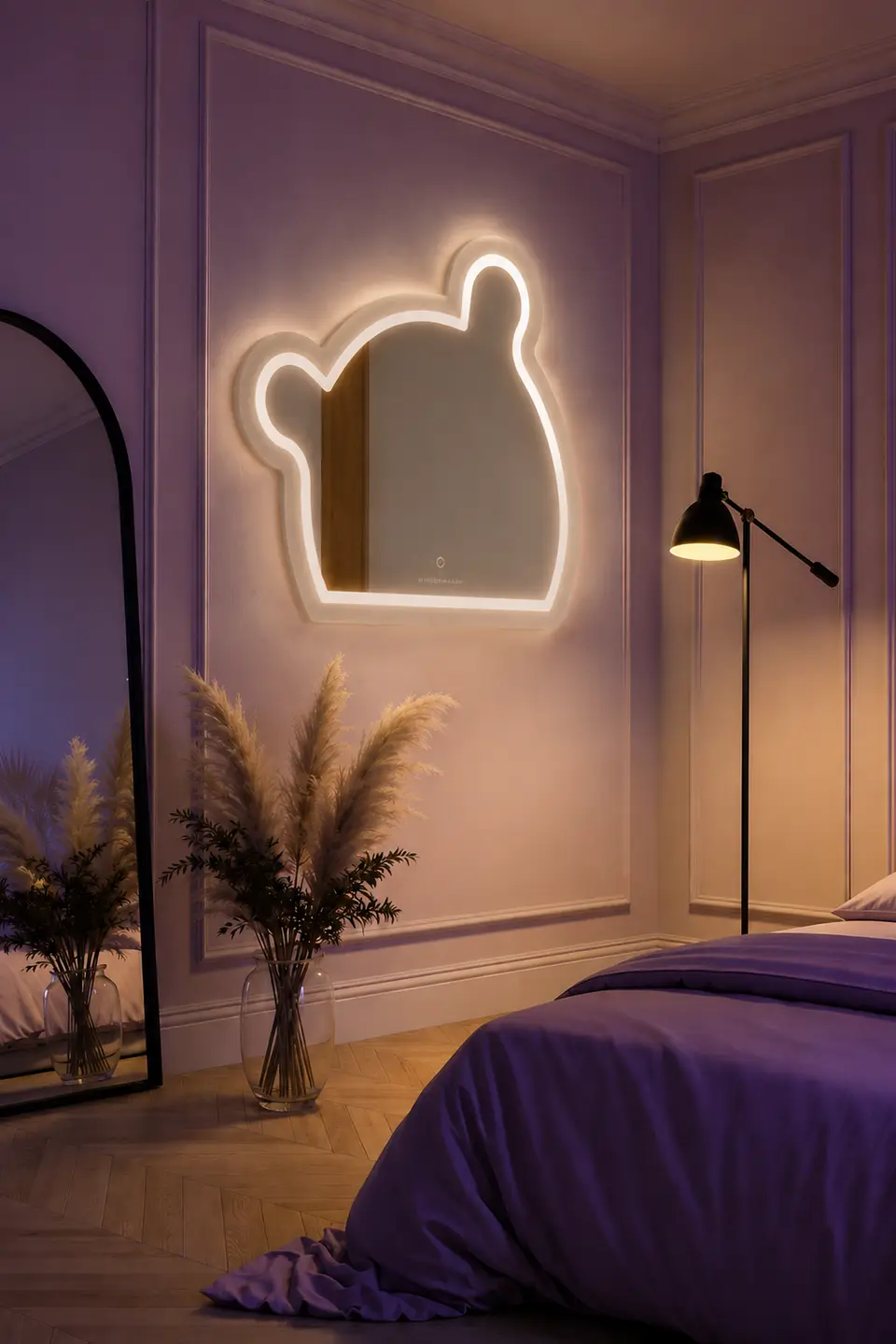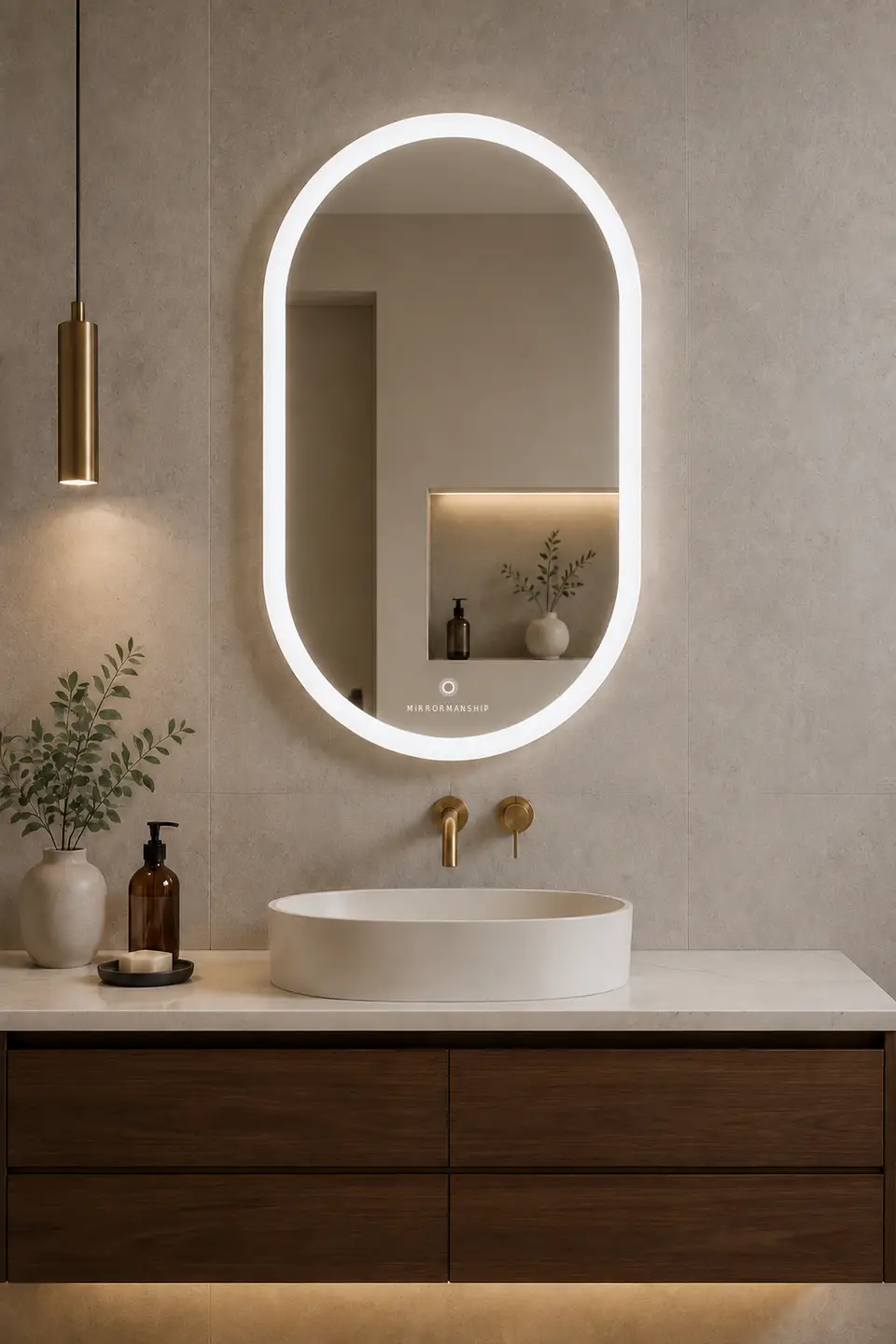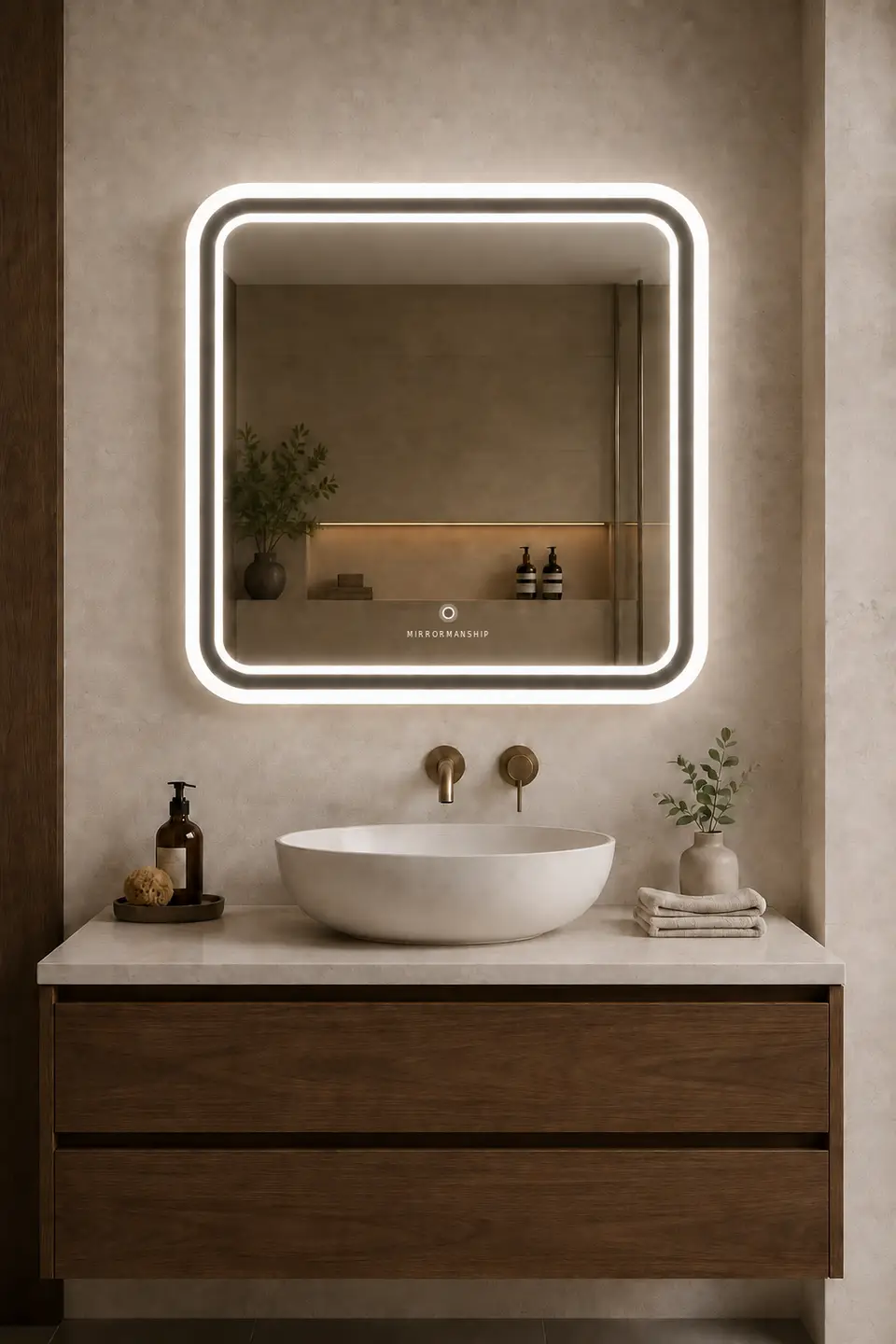
Mirror size affects comfort, lighting and the apparent scale of a room. A few careful measurements can turn a good design into one that looks made for the space.
Measure three things
Record the vanity width, the clear wall width and the available height between the basin and any ceiling fixture. Measure twice and note projections such as taps, shelves and wall lights.
Use the smallest clear dimension as your real limit. A drawing with all measurements is more useful than a single width sent over chat.
Match width to the vanity
For a calm composition, choose a mirror that is slightly narrower than the vanity. A mirror equal to the vanity width creates a bolder, architectural look. On a double vanity, one wide rectangle feels unified while two round or capsule mirrors create individual zones.
Compare common formats
A 24 × 24 inch mirror suits compact wash areas or powder rooms. A 30 × 30 inch format gives a round or square design more presence. A 36 × 36 inch mirror works well where the wall and vanity can support a larger focal point.
Rectangular formats such as 24 × 30, 24 × 36 and 30 × 36 inches add useful height or width. Orientation matters: portrait emphasises ceiling height; landscape increases the shared viewing area.
Account for the glow
Backlit mirrors need visible wall around the perimeter for the halo to read clearly. If the mirror nearly touches side walls, the glow can feel compressed. Leave breathing room and consider the wall colour: lighter surfaces reflect more ambient light.
Use custom sizing wisely
Custom sizing is valuable for wide vanities, niches and unusually placed electrical points. Confirm whether dimensions describe the glass, outer frame or maximum illuminated footprint. For non-standard shapes, ask for the widest and tallest finished dimensions.
Ready to find your mirror?
Explore shapes, lighting and sizes across the MirrorManShip collection.
Explore LED mirrors → View catalogue →