A beautiful mirror can still perform poorly if the rest of the lighting casts shadows. Good bathroom lighting is layered: face light for detail, ambient light for the room and optional accent light for atmosphere.
Light the face from the front
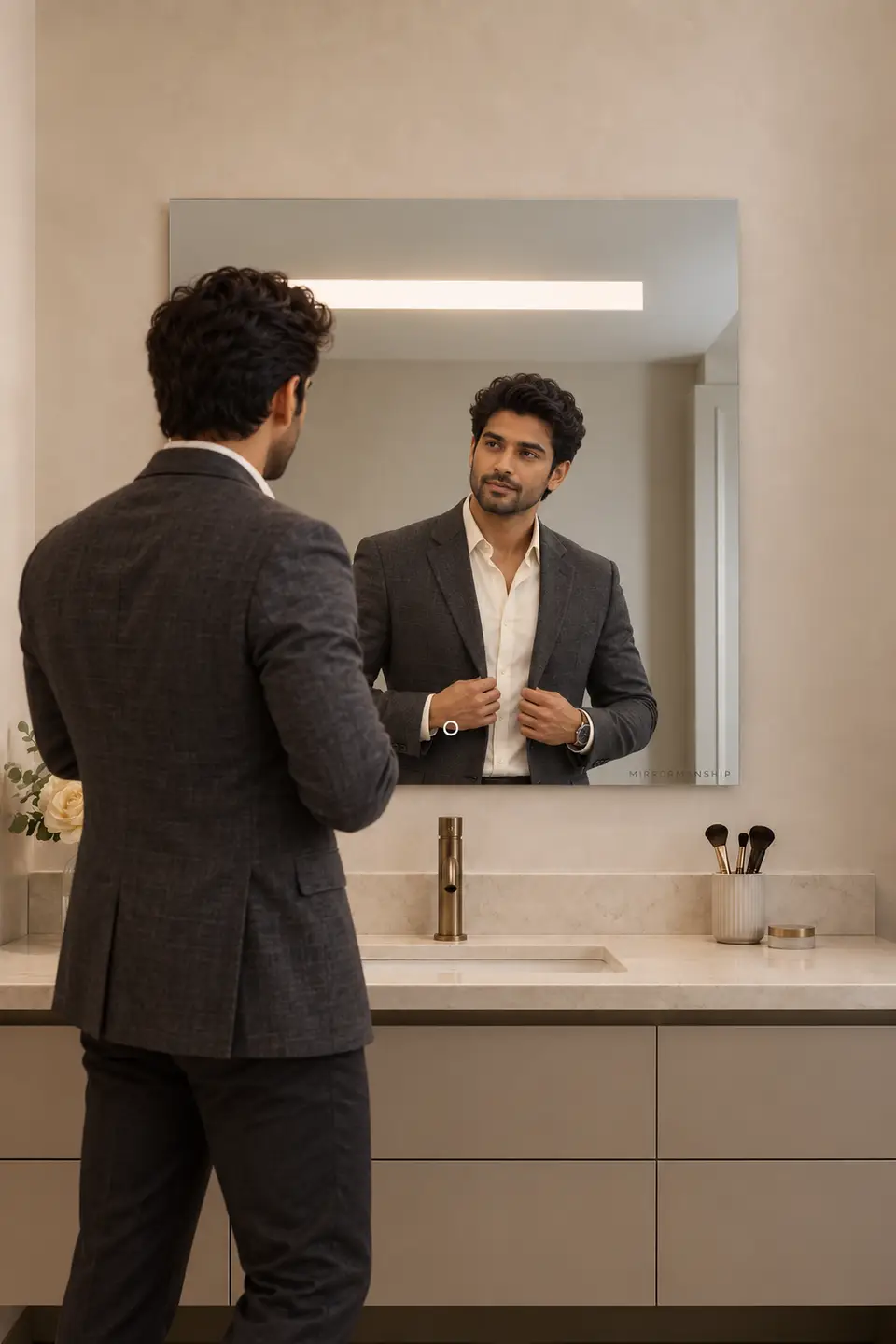
Light that reaches the face from both sides or around the mirror reduces the shadows created by a ceiling downlight. A diffused front-lit mirror is useful because the source sits close to eye level.
Avoid relying only on a bright point directly above the head. It can create deep shadows under brows, the nose and chin.
Separate task and ambience
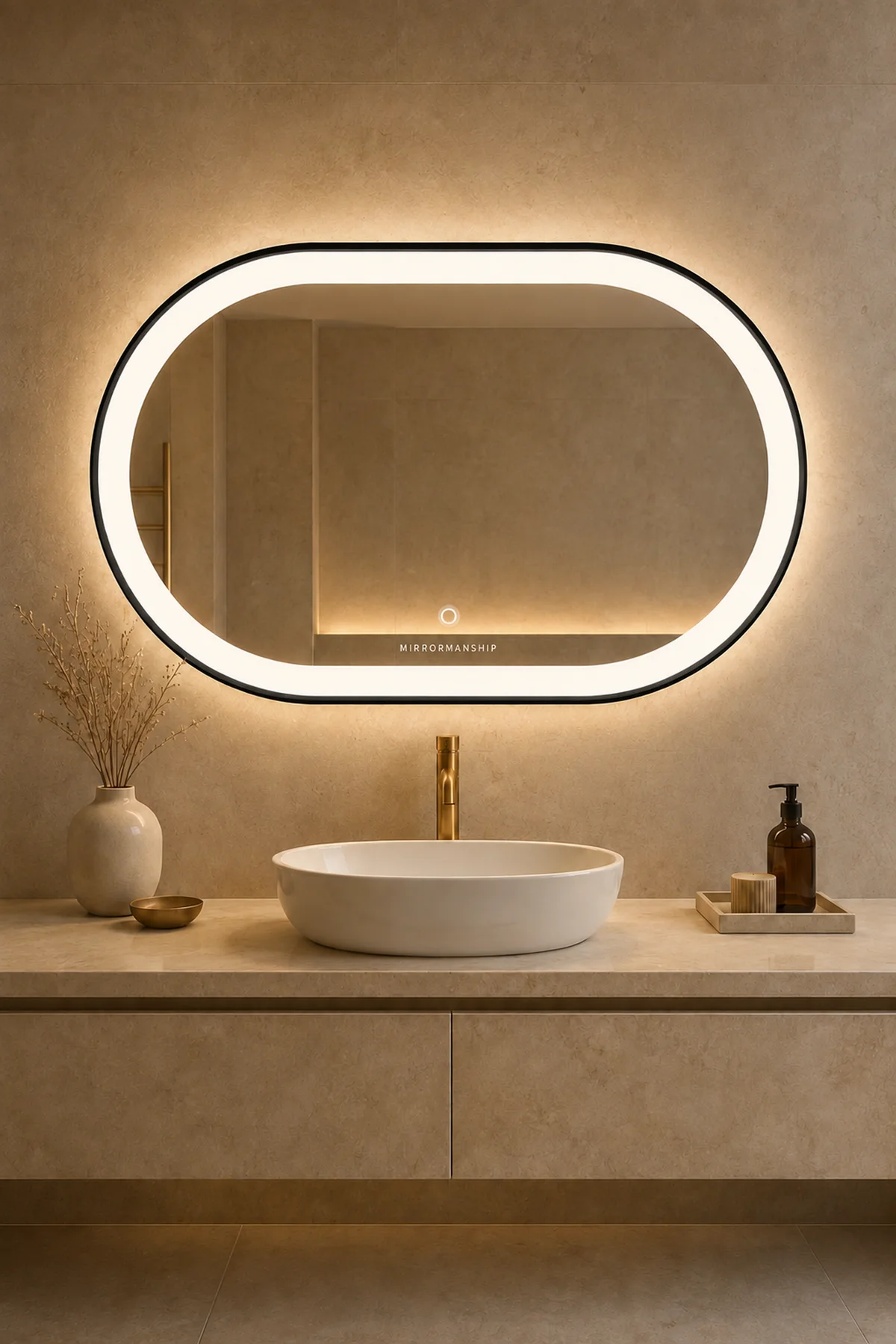
Use the mirror light for grooming and a ceiling or wall source for general movement. The room should remain usable if either layer is off. Backlighting adds atmosphere and helps define the mirror, but it should not be assumed to replace direct task light.
Control glare
A larger illuminated area at moderate brightness is often more comfortable than a narrow, intense strip. Glossy tile, chrome and glass can multiply reflections, so assess glare from normal standing positions.
Dimming can help at night, while a neutral colour setting supports detailed tasks. Feature availability varies, so confirm controls before ordering.
Plan switching and power
Decide whether the mirror will use a wall switch, integrated touch control or both. Place the power connection according to the installation drawing so cables remain concealed.
Bathrooms are wet environments. Ask a qualified electrician to confirm suitable wiring, protection and placement for the specific room and local code.
Test before final installation
Temporarily hold a light at the planned height and check the face from different distances. Couples and families should test for different user heights before fixing the mirror position.
Ready to find your mirror?
Explore shapes, lighting and sizes across the MirrorManShip collection.
Explore LED mirrors → View catalogue →