LED Mirror Defoggers: Features, Suitability and Warranty
Updated 29 October 2026 — MIRRORMANSHIP product conditions. MIRRORMANSHIP mirrors support normal dry and wet indoor use, including bathrooms, when installed according to the specific model instructions. Normal bathroom use does not void the warranty. Incorrect installation, immersion and use outside those instructions are excluded. Coverage is five years for non-commercial use and two years for commercial use, subject to conditions and operating-hour limits; the glass exclusion and other warranty conditions apply. Normal wet-area use is covered for defects in covered parts, materials and workmanship. Read the complete terms.
What an anti-fog feature means
A demister is a feature found on some mirrors. Its availability, heated area, controls and performance must be confirmed for the exact model. It does not establish bathroom suitability or make an entire mirror waterproof.
Check the product, not just the feature name
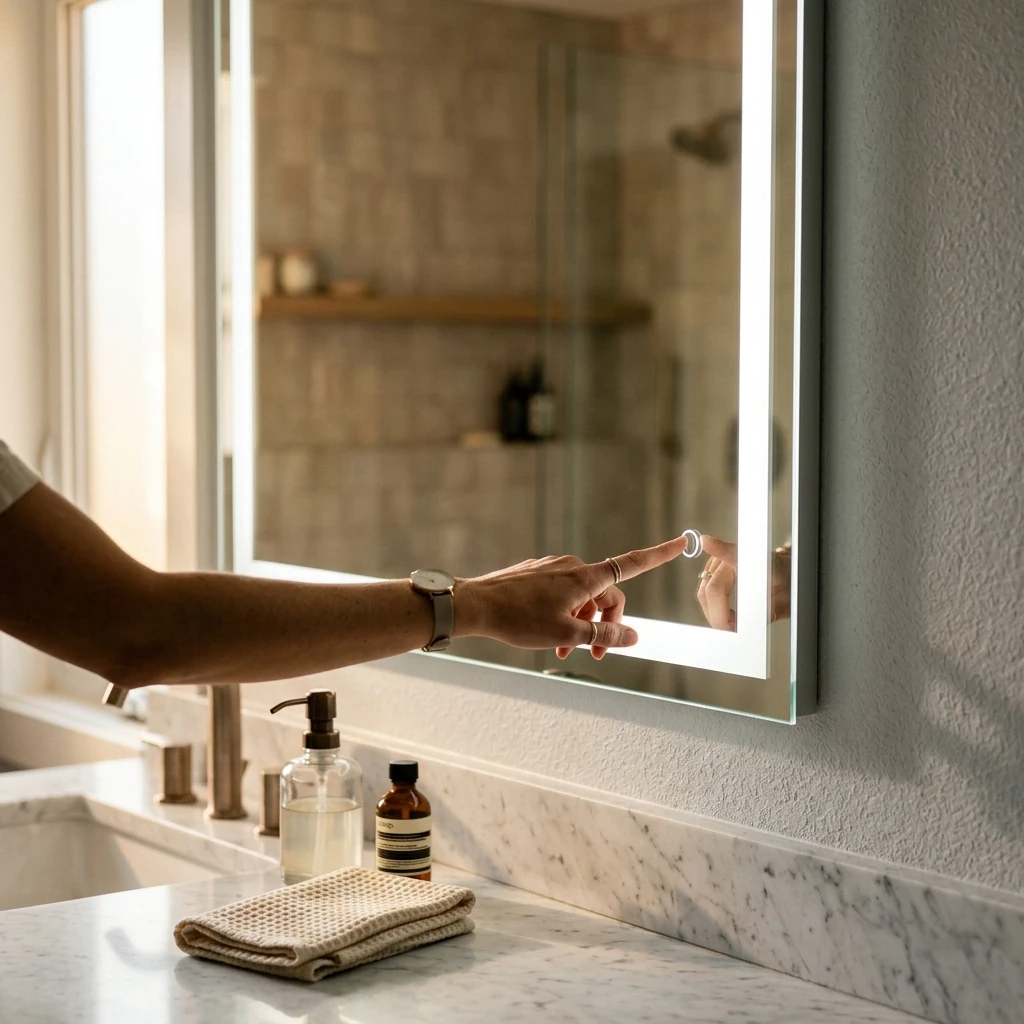
For a bathroom project, obtain the manufacturer’s written installation instructions, permitted locations and documented electrical protection for the exact product. Have a qualified installer assess the location and local requirements. Do not infer suitability from a touch sensor, product photograph or generic IP rating mentioned in an article.
MIRRORMANSHIP’s current scope
MIRRORMANSHIP mirrors support normal dry and wet indoor use, including bathrooms. Confirm whether a defogger is included in the selected model and follow its installation instructions.
Buying questions to ask
What is the exact model and intended installation location?
Which lighting and control options are included?
What documentation supports any stated protection or performance rating?
What are the covered components, exclusions and service charges?
For bathrooms, bedrooms and dressing spaces, explore MIRRORMANSHIP mirrors and request a written specification before ordering.
CRI 90 vs CRI 80: Which LED Mirror Is Best for Makeup and True Colour Accuracy?
Updated 29 October 2026 — MIRRORMANSHIP product conditions. MIRRORMANSHIP mirrors support normal dry and wet indoor use, including bathrooms, when installed according to the specific model instructions. Normal bathroom use does not void the warranty. Incorrect installation, immersion and use outside those instructions are excluded. Coverage is five years for non-commercial use and two years for commercial use, subject to conditions and operating-hour limits; the glass exclusion and other warranty conditions apply. Normal wet-area use is covered for defects in covered parts, materials and workmanship. Read the complete terms.
This article explains lighting terminology in general. It does not certify a MIRRORMANSHIP model as CRI 90+ or establish an R9 value. Request documented measurements for the exact model before ordering.
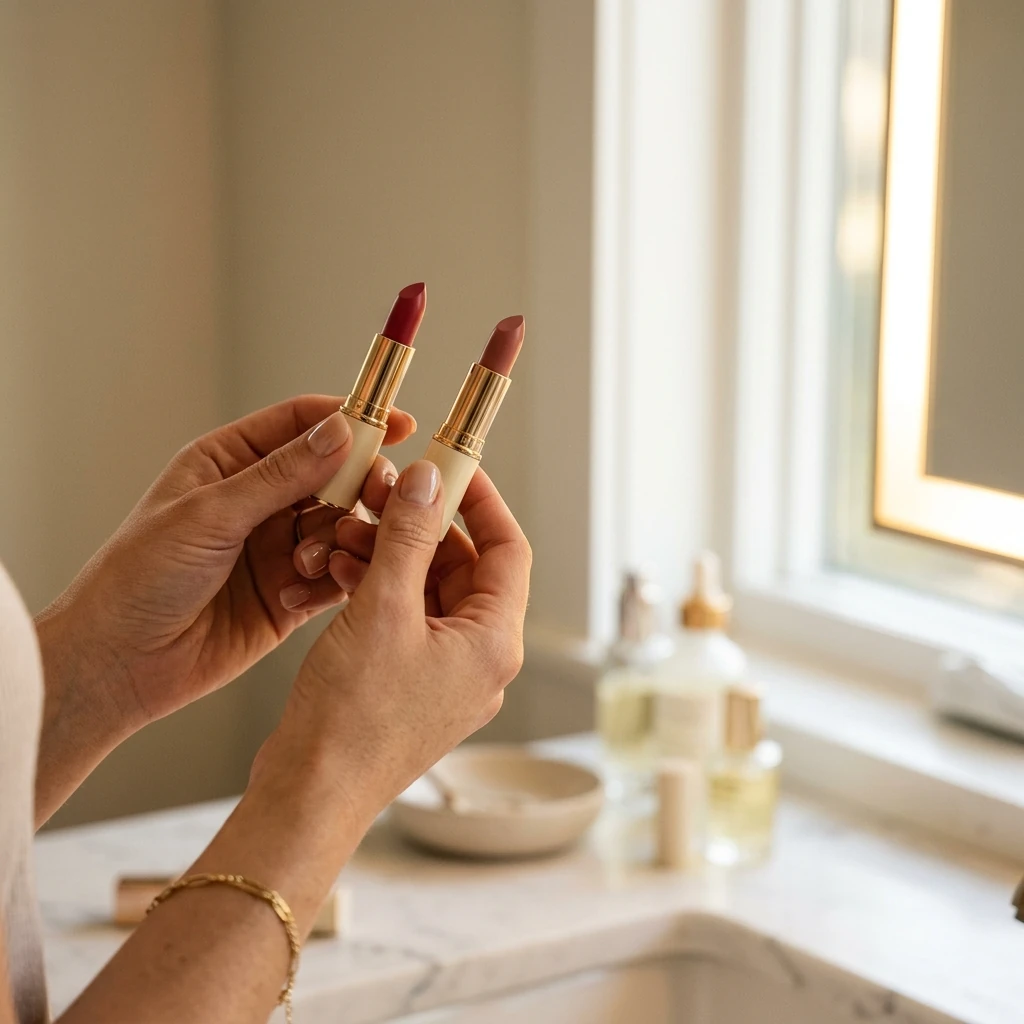
A CRI 90+ LED mirror shows you colours your bathroom light has been hiding. That bold red lipstick you applied under a standard fixture? It probably looked closer to brick by the time you reached natural daylight. The gap between what you see in your mirror and what the world sees comes down to one spec most buyers ignore: the Colour Rendering Index.
A 2025 arXiv study measured this gap precisely, finding a 23% reduction in hue-shift error when stepping from CRI 80 to CRI 90 LEDs, along with a 17-point jump in R9, the index that tracks deep reds. Reds and warm skin tones are exactly where makeup accuracy lives. Below, you’ll learn what those numbers mean in practice, where each CRI tier fits, and how to pick the right mirror for your routine and your room.
Key Points
A 2025 arXiv study found that stepping from CRI 80 to CRI 90 LEDs reduced hue-shift error by 23% and raised R9 (the index tracking deep reds) by 17 points, which matters because lips, blush, and skin undertones all live in the red spectrum.
Standard CRI scores average performance across eight pastel test colours but do not weight R9, so a mirror with CRI 82 can still render reds poorly if its R9 score is low, while CRI 90+ LEDs typically deliver R9 scores above 50 compared to 30-35 for many CRI 80 panels.
The sweet spot for makeup application sits between 4000K and 5000K colour temperature, because 6500K renders colours accurately but harshly while 2700K softens details and shifts warm tones toward amber.
You need a minimum of 300 lux at face level for high CRI to work properly, because below that your pupils dilate, colours look washed, and you lose the advantage of accurate colour rendering.
Front-lit mirrors distribute light across your face evenly for makeup accuracy, while backlighting creates ambience but not accuracy, and yellowish overhead bathroom fixtures will contaminate the colour output of even the best mirror.
Reputable manufacturers publish both CRI and R9 values with spec sheets or test reports, so if customer service cannot tell you the R9 score or only offers marketing phrases like “high CRI,” the mirror probably was not designed for colour-critical use.
What is a CRI 90+ LED mirror?
CRI stands for Colour Rendering Index.
It scores how faithfully a light source reproduces colours compared to a reference illuminant, typically natural daylight. The scale runs from 0 to the reference standard, with the reference being a perfect match.
Most LED mirrors sold in India sit at CRI 80.
That’s the floor the industry considers acceptable for general use.
The U.S. General Services Administration confirmed this threshold in its 2025 LED guidance, which mandates CRI above 80 for all interior fixtures while steering specifiers toward CRI 90+ for colour-critical locations like vanity areas and healthcare settings.
The R9 problem standard CRI hides
Here’s what trips up even informed buyers.
The general CRI score averages performance across eight pastel test colours (R1–R8). It doesn’t weight R9, which tracks saturated reds.
Why does that matter for you?
Your lips, blush, and skin undertones all live in the red spectrum. A mirror with CRI 82 can still render reds poorly if its R9 score is low.
When you’re comparing mirrors, ask for the R9 value specifically.
A CRI 90+ LED typically delivers R9 scores above 50, while many CRI 80 panels hover around 30–35.
CRI 80 vs CRI 90+: what changes in front of the mirror
Numbers matter less than what you actually experience. So let’s translate CRI ratings into daily scenarios.
Factor
CRI 80 LED Mirror
CRI 90+ LED Mirror
Skin tone accuracy
Slight yellow or green cast on warm undertones
Skin tones match daylight closely
Red and berry lip shades
Appear muted or shifted toward brown
True saturation visible before you leave home
Foundation matching
Neck-to-face mismatch common under artificial light
Blending errors visible at the mirror stage
Eye shadow blending
Subtle colour transitions harder to judge
Gradient shifts between shades clearly readable
Typical R9 score
30–40
50–80+
Price premium
Baseline
Higher, depending on brand and size
The price gap is real, but so is the frustration of re-doing your makeup in the car because the mirror lied.
If you’re spending on quality cosmetics, a CRI 80 mirror quietly undermines that investment every morning.
When CRI 80 is honestly good enough
We wouldn’t recommend CRI 90+ for every mirror in your home. That would be overkill.
A hallway mirror, a gym bathroom, a mirror behind a bar cart: CRI 80 handles these spaces fine.
You don’t need colour-critical rendering to check whether your hair is in place.
Save the premium CRI for your primary vanity, your bedroom dressing area, or wherever you do detailed grooming. Spend where accuracy counts.
How to choose the right CRI tier for your setup
CRI doesn’t work alone.
Colour temperature and brightness both interact with it, and getting one right while ignoring the others still gives you a misleading reflection.
Pair CRI with the right colour temperature
A CRI 90+ mirror running at 6500K (cool daylight) will render colours accurately but harshly. Every pore and blemish jumps forward.
At 2700K (warm white), the same high-CRI panel softens details and shifts warm tones toward amber.
The sweet spot for makeup application sits between 4000K and 5000K.
That range mimics the daylight conditions most people encounter outdoors. If your mirror offers adjustable colour temperature, you can switch between warm, natural, and cool light depending on whether you’re applying daytime or evening makeup.
Brightness and placement change what you see
Even a CRI 95 mirror underperforms if it’s too dim or if overhead bathroom fixtures cast competing shadows. Two quick rules:
Minimum 300 lux at face level. Below that, your pupils dilate, colours look washed, and you lose the advantage of high CRI.
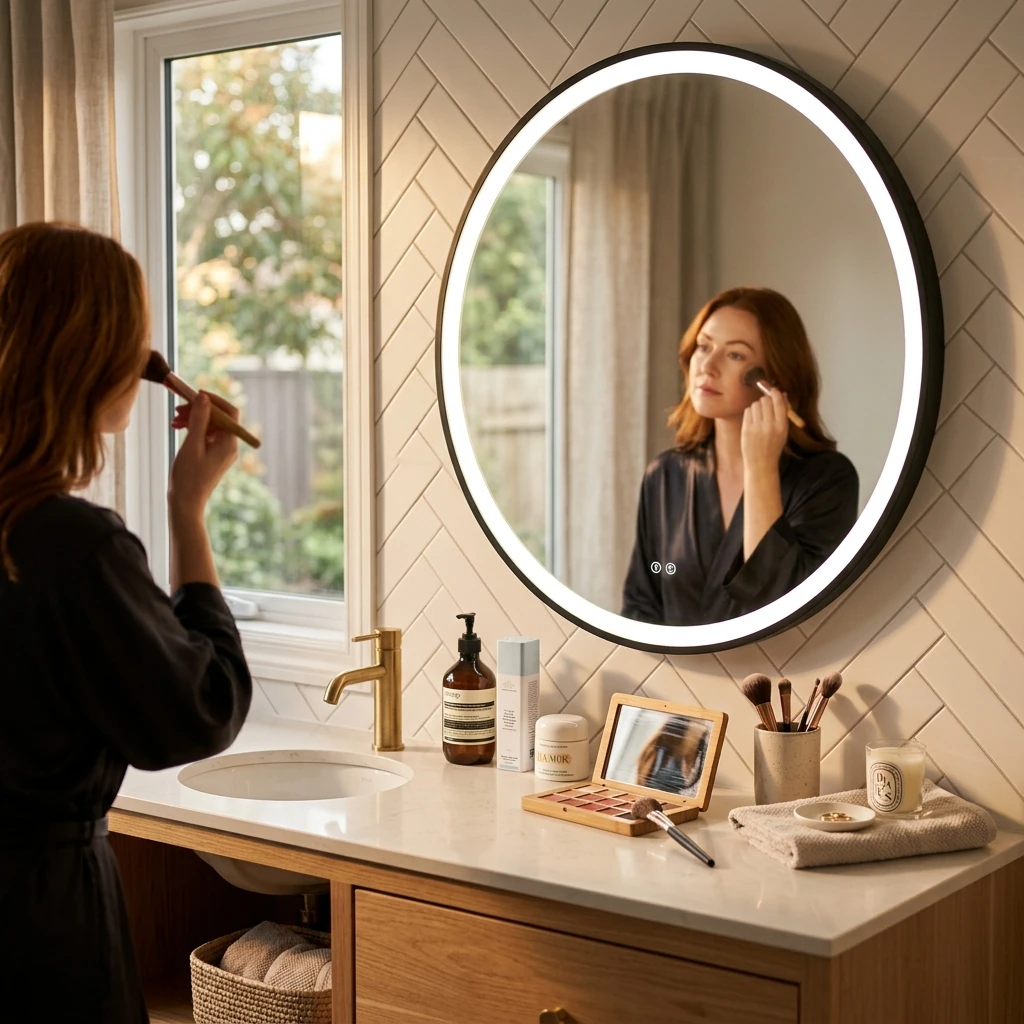
Front-lit beats backlit for makeup. Perimeter or edge-lit mirrors distribute light across your face evenly. Backlighting creates ambience.
If your bathroom has a yellowish ceiling fixture, it will contaminate the colour output of even the best mirror.
Dimming or replacing overhead lights makes a bigger difference than most people expect.
What to verify before buying a high-CRI LED mirror in India
“High CRI” without a number is a red flag. So is “daylight quality” with no spec sheet. Here’s what to look for.
Ask for the exact CRI and R9 values. A reputable manufacturer publishes both. If customer service can’t tell you the R9 score, the mirror probably wasn’t designed for colour-critical use.
Check whether the LED panel is integrated or replaceable. Integrated panels last longer and maintain consistent output, while replaceable bulb setups can drift in CRI as individual LEDs age unevenly.
Look for dimming and colour-temperature controls. A CRI 90+ mirror with fixed 6500K light limits your flexibility. Tuneable white gives you range across routines.
If you’re comparing products side by side, our LED mirror buying checklist for Indian homes walks through every spec worth verifying, from IP ratings to driver quality. And if you want to understand how manufacturing choices affect light output, the guide on how LED mirrors are made in India breaks down what separates budget panels from premium ones.
Frequently asked questions
How can I verify a mirror’s CRI and R9 claims if the listing looks vague?
Ask the seller for a spec sheet or test report that lists CRI and R9 explicitly. If they cannot provide documentation (or they only quote CRI and avoid R9), treat it as a warning sign and compare other brands that publish full photometric details.
Do I need different lighting for daytime makeup versus evening makeup?
Yes, you will get more reliable results if you can switch between a neutral setting for everyday wear and a slightly warmer setting to preview how makeup reads in indoor, evening environments. A mirror with tuneable white helps you test looks across common real world lighting conditions without changing rooms.
Will my makeup look different if I wear glasses or contact lenses while applying it?
It can, because lenses can change perceived contrast and sharpness, which affects how you judge blending and edges. If you usually wear glasses outside, do a final check with them on so you can confirm symmetry and intensity as you will actually see it.
What mirror size and shape works best for accurate makeup application?
Choose a mirror that frames your entire face and hairline at a comfortable distance, so you are not leaning in and changing angles while you work. Wider mirrors are helpful if you also style hair or check outfits, while a taller shape can be better when you want consistent visibility from forehead to neckline.
How do I maintain consistent color performance as an LED mirror ages?
Keep the mirror clean, avoid harsh chemical cleaners on diffusers, and ensure stable power (a quality driver or surge protection helps reduce flicker and premature shift). If you notice uneven brightness or tint changes over time, it is often a driver or LED module quality issue.
Are there any health or comfort considerations when using bright vanity lighting daily?
Look for low flicker performance and comfortable dimming so you can avoid eye strain during longer routines. If you are sensitive to glare, a well diffused panel and adjustable brightness will feel more comfortable than a mirror that is always at full intensity.
What installation factors should I plan for before buying an LED mirror in India?
Confirm the wall space, power point location, and whether you want concealed wiring for a clean look. Also check bathroom conditions like splash zones and ventilation, then choose a mirror with appropriate protection ratings and a reliable installer to avoid moisture related issues later.
Colour accuracy starts at the mirror
The difference between CRI 80 and CRI 90+ won’t matter for every mirror you own. But for the one where you apply makeup, match foundation, or check how an outfit reads under real light, those ten points on the index translate into confidence that what you see is what everyone else will see.
Pair high CRI with the right colour temperature, enough brightness, and front-facing illumination, and your mirror stops being a guessing game.
Find your CRI 90+ LED mirror with MirrorManShip
For a MIRRORMANSHIP mirror in a dry or wet indoor grooming area, request the exact model’s available dimensions, lighting options and any documented CRI and R9 measurements. Specifications and custom configurations require written confirmation.