A custom LED mirror solves a problem most people don't realize they have until they've already hung a standard mirror on the wall: bad lighting at the worst possible moment. You lean in to shave, apply makeup, or check your skin, and the overhead fixture throws shadows exactly where you need clarity.
Grand View Research projects the global smart bathroom mirrors market will grow at an 11.2% CAGR through 2030, driven largely by demand for built-in LED lighting and touch controls. That growth tells you something: buyers are done settling for mirrors that only reflect. Below, you'll find a practical breakdown of how to specify a custom LED mirror, which features actually matter in a bathroom, and how touch controls should work so they don't frustrate you daily.
Key Points
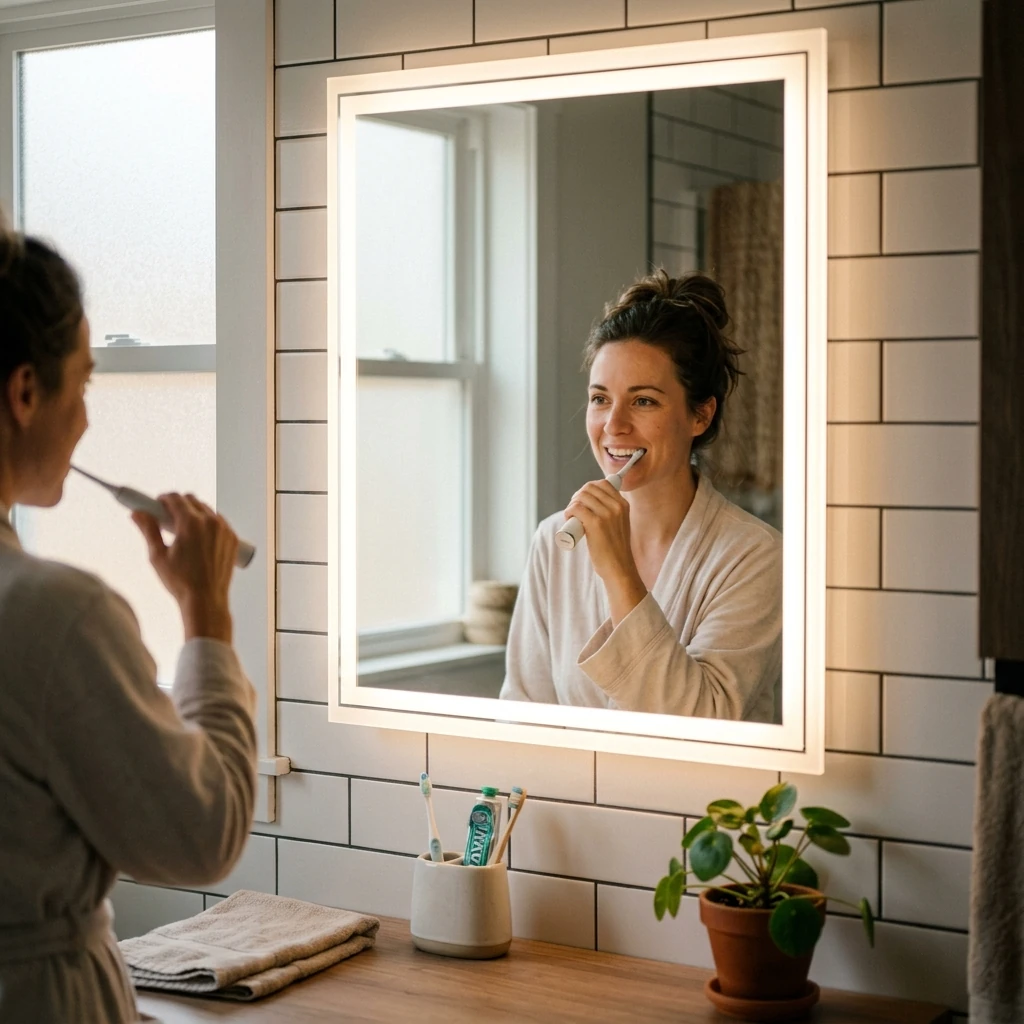
Standard bathroom lighting from ceiling fixtures or sconces creates shadows under the brow line and along the jawline, while an LED bathroom mirror places light at the source so illumination hits your face from the same angle you're looking at it.
Custom LED mirrors let you switch between warm light around 2700K, which flatters but distorts colour accuracy, and cool light at 5000K or higher, which reveals detail but feels clinical, so you can adjust for skincare routines versus evening ambiance.
Quality touch panels use sensors calibrated for high-humidity environments and should carry IP44 or higher ingress protection ratings plus recognized electrical certifications like CE or UL to confirm the mirror won't short out in a steamy bathroom.
The IEA recommends that manufacturers engineer mirrors with replaceable LED drivers and touch-control modules so individual components can be swapped without discarding the entire unit, cutting long-term cost when a single part fails.
A custom mirror needs a dedicated electrical connection behind the wall, and retrofitting this after tiling is expensive and messy, so plan the wiring during your bathroom renovation rather than after.
Focus your budget on accurate dimmable lighting, reliable touch controls, and anti-fog capability, which industry analysts call the high-value trio for bathroom mirrors, rather than add-ons like Bluetooth speakers or built-in clocks that add visual clutter for marginal utility.
What is a custom LED mirror?
Most bathrooms rely on a ceiling light or a pair of sconces flanking a basic mirror.
That setup creates uneven illumination across your face.
Shadows pool under the brow line and along the jawline. You compensate by leaning closer, which doesn't fix the problem.
An LED bathroom mirror places light at the source, surrounding or backlighting the reflective surface so illumination hits your face from the same angle you're looking at it.
The difference is immediate and hard to un-notice once you've experienced it.
What makes a custom LED mirror worth it
Off-the-shelf LED mirrors come in a handful of standard sizes and shapes.
If your vanity is 48 inches wide but the closest stock mirror is 42 or 54, you're stuck with awkward proportions.
Customization removes that compromise.
Size and shape matched to your space
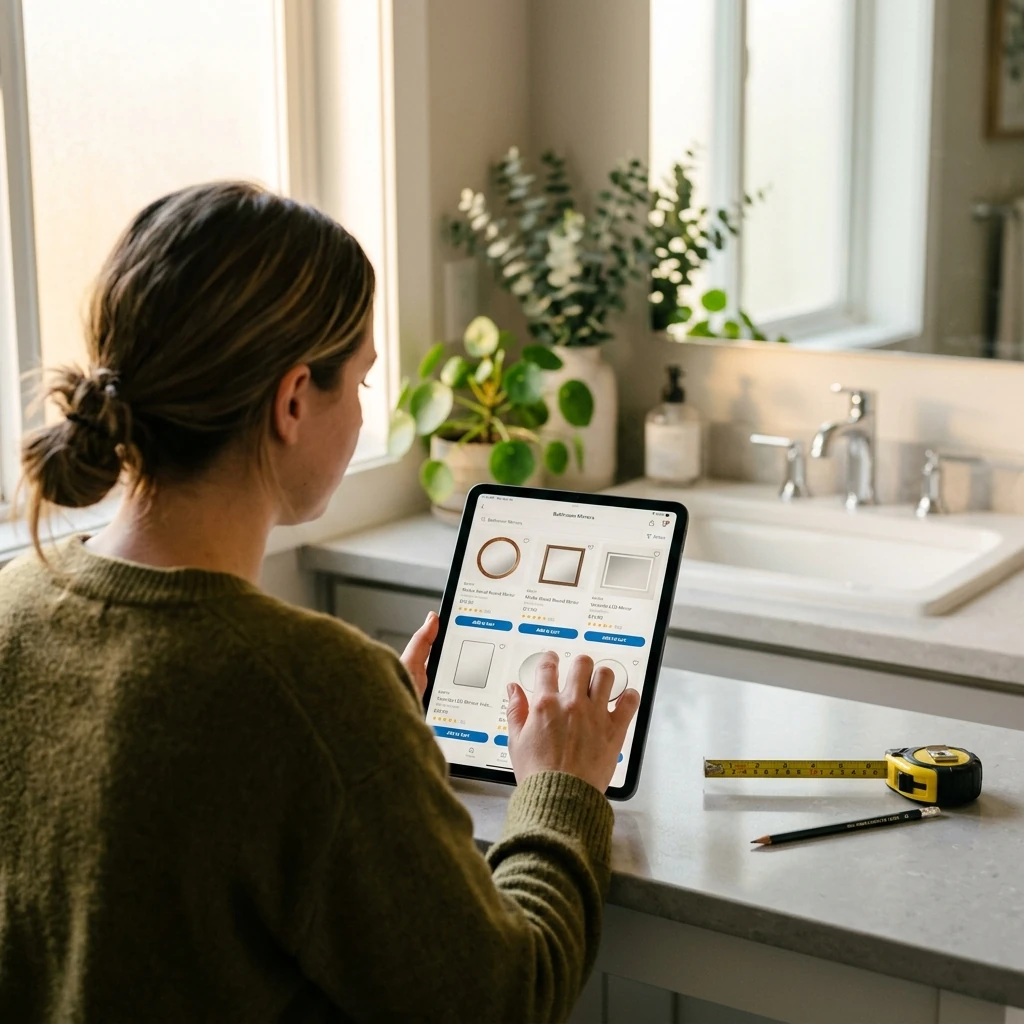
A custom LED mirror starts with your wall dimensions. Whether you need a narrow vertical rectangle for a tight powder room or an oversized round mirror above a double vanity, the mirror fits the space rather than the other way around.
If you're unsure where to start, an LED mirror size guide based on wall proportions helps you nail the measurements before ordering.
Colour temperature you actually choose
This is where most buyers underestimate how much control matters.
Warm light (around 2700K) flatters but distorts colour accuracy. Cool light (5000K+) reveals detail but feels clinical.
The best custom mirrors let you switch between warm, neutral, and cool settings.
That way your morning skincare routine gets accurate colour rendering while your evening wind-down gets softer ambiance.
Understanding the differences between warm, natural, and cool LED colour temperatures saves you from locking into the wrong tone permanently.
Touch controls that work in wet conditions
A bathroom mirror with touch is only useful if the sensor responds reliably when your hands are damp.
Cheap capacitive sensors misfire with water droplets or ignore wet fingertips entirely.
So what should you look for?
Quality touch panels use sensors calibrated for high-humidity environments. They register a deliberate press while ignoring stray water contact.
Dimming, on/off, and colour temperature switching should each respond within a fraction of a second.
A Fogless Mirrors Market report from Research and Markets found that brands advertising full safety certifications experienced higher retailer acceptance and faster regulatory approvals for touch-enabled models.
Look for IP44 or higher ingress protection ratings and recognized electrical certifications like CE or UL. Those aren't marketing fluff; they confirm the mirror won't short out in a steamy bathroom.
Anti-fog and touch working together
Some LED mirrors with touch integrate a demister pad behind the glass.
A single touch activates the defogger, clearing the surface within 30 seconds of a hot shower.
Without it, you're wiping the mirror with a towel every few minutes.
We'd recommend treating anti-fog as a near-mandatory feature in any bathroom that sees daily showers. If you're weighing whether you really need it, this breakdown of when anti-fog mirrors are worth the investment makes the decision simpler.
Designing a custom LED mirror that lasts
Longevity depends on two things: build quality and repairability.
The IEA recommends that manufacturers engineer mirrors with replaceable LED drivers and touch-control modules so individual components can be swapped without discarding the entire unit.
That modular approach cuts long-term cost and means a single failed driver doesn't turn your mirror into scrap.
When you're evaluating a custom LED mirror supplier, ask specifically whether the LED driver and touch board are serviceable.
If the answer is vague, that's a red flag.
Installation prep matters more than you think
A custom mirror needs a dedicated electrical connection behind the wall.
Retrofitting this after tiling is expensive and messy.
Plan the wiring during your bathroom renovation. An installation checklist covering wall prep before delivery keeps you from discovering problems the day your mirror arrives.
Choosing features that earn their price
Built-in Bluetooth speakers? Nice in theory, but most people already have a phone speaker within arm's reach.
Built-in clocks and temperature displays add visual clutter for marginal utility.
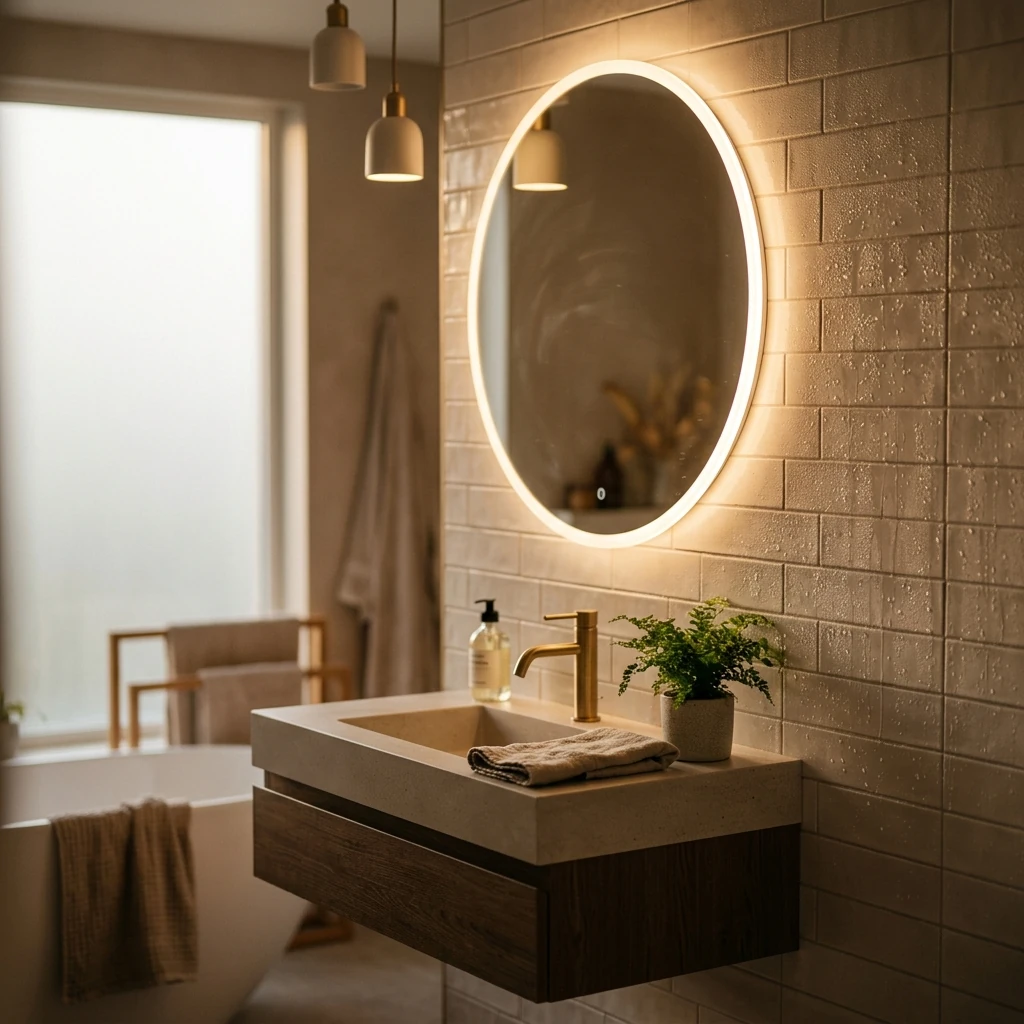
Focus your budget on the features that affect daily usability: accurate dimmable lighting, reliable touch controls, and anti-fog.
These three form what industry analysts call the high-value trio for bathroom mirrors.
Everything beyond that is personal preference.
Should you skip extras entirely? A magnification inset panel is useful for detail work like eyeliner or contact lenses. Just be honest about which features you'll actually use six months from now.
Frequently asked questions
How do I choose the right brightness level for an LED bathroom mirror?
Look for lumen output and dimming range. For most vanities, you want enough light to see detail without glare, so prioritize smooth dimming and a diffuser that spreads light evenly across the face.
Can an LED mirror replace vanity lights, or should I use both?
An LED mirror can handle task lighting, but layered lighting usually feels better in real bathrooms. Use the mirror for face-level detail work and add ambient or ceiling lighting to keep the room balanced and avoid a dark perimeter.
What mirror thickness and glass quality should I ask for when ordering custom?
Specify tempered safety glass and ask about optical clarity, edge finishing, and backing protection. Good suppliers can confirm the glass spec, corrosion resistance, and whether the reflective layer is built for humid environments.
How do I maintain and clean a touch LED mirror without damaging sensors?
Use a non-ammonia glass cleaner or a damp microfiber cloth, then dry it to prevent streaks. Avoid abrasive pads and heavy spraying directly onto touch areas, apply cleaner to the cloth first to reduce moisture intrusion.
What should I know about hardwired versus plug-in LED mirror options?
Hardwired installs look cleaner and are common in renovations, while plug-in models can be easier for quick upgrades if you have a nearby outlet. Confirm cable routing, cord length, and whether the mirror can be converted later if your setup changes.
Are there accessibility-friendly touch alternatives for bathroom mirrors?
Yes, many models support external wall switches, motion sensors, or remote controls to reduce reach and improve usability. If accessibility is a priority, ask for large touch targets, tactile indicators, or switch compatibility before manufacturing.
What warranty details matter most for a custom LED mirror?
Focus on coverage for the LED driver, touch controller, and demister, plus clear terms for replacement parts and labor. Also ask how claims work, including lead times for parts and whether support is provided for troubleshooting during installation.
Your mirror should work as hard as the rest of your bathroom
A custom LED mirror is a functional upgrade. The right size eliminates visual awkwardness, calibrated lighting improves every task you do at the vanity, and dependable touch controls mean you stop fighting your fixtures and start using them.
Prioritize repairability, proper IP ratings, and the lighting-touch-defog trio. Skip the gimmicks. Get the fundamentals right, and the mirror earns its place on your wall for years.
Explore custom LED mirrors from MirrorManShip
MirrorManShip specializes in custom LED mirrors built to your exact specifications, from shape and size to lighting temperature and touch functionality. Every mirror ships with replaceable components and dedicated support from installation through long-term care. Browse the full range of customizable LED mirrors and start designing one that fits your bathroom.